The short answer before you sew the quilt sandwich

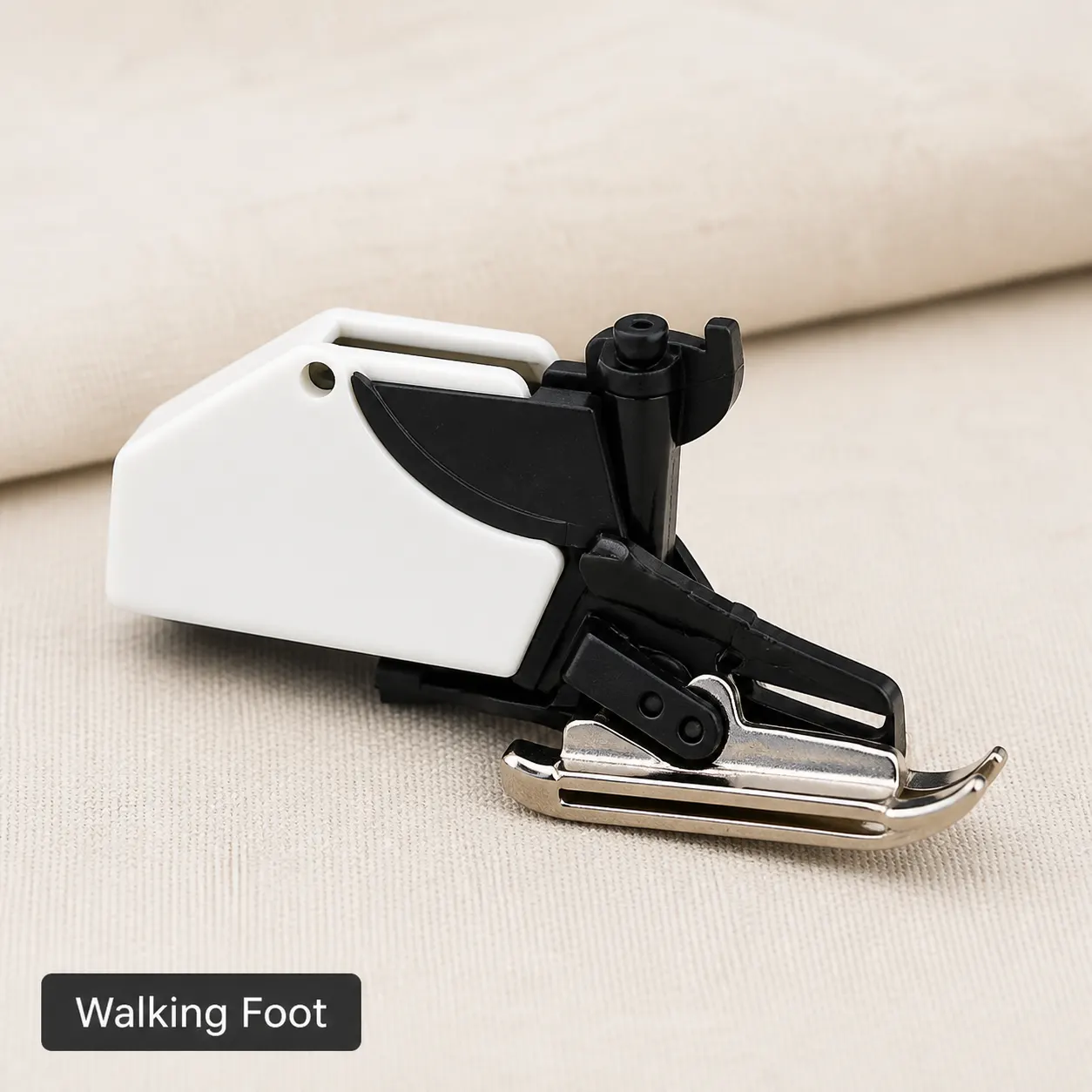
Walking Foot Presser Foot controls and screen

If you are asking, “do I need a walking foot for quilting?”, the practical answer is: you probably want one if you plan to sew straight or gently guided lines through several quilt layers on a household sewing machine. It is not a magic fix for every pucker, and it does not replace good basting, support for the quilt weight or a careful fit check. It is most useful when the top, wadding and backing want to move at different speeds under an ordinary presser foot.

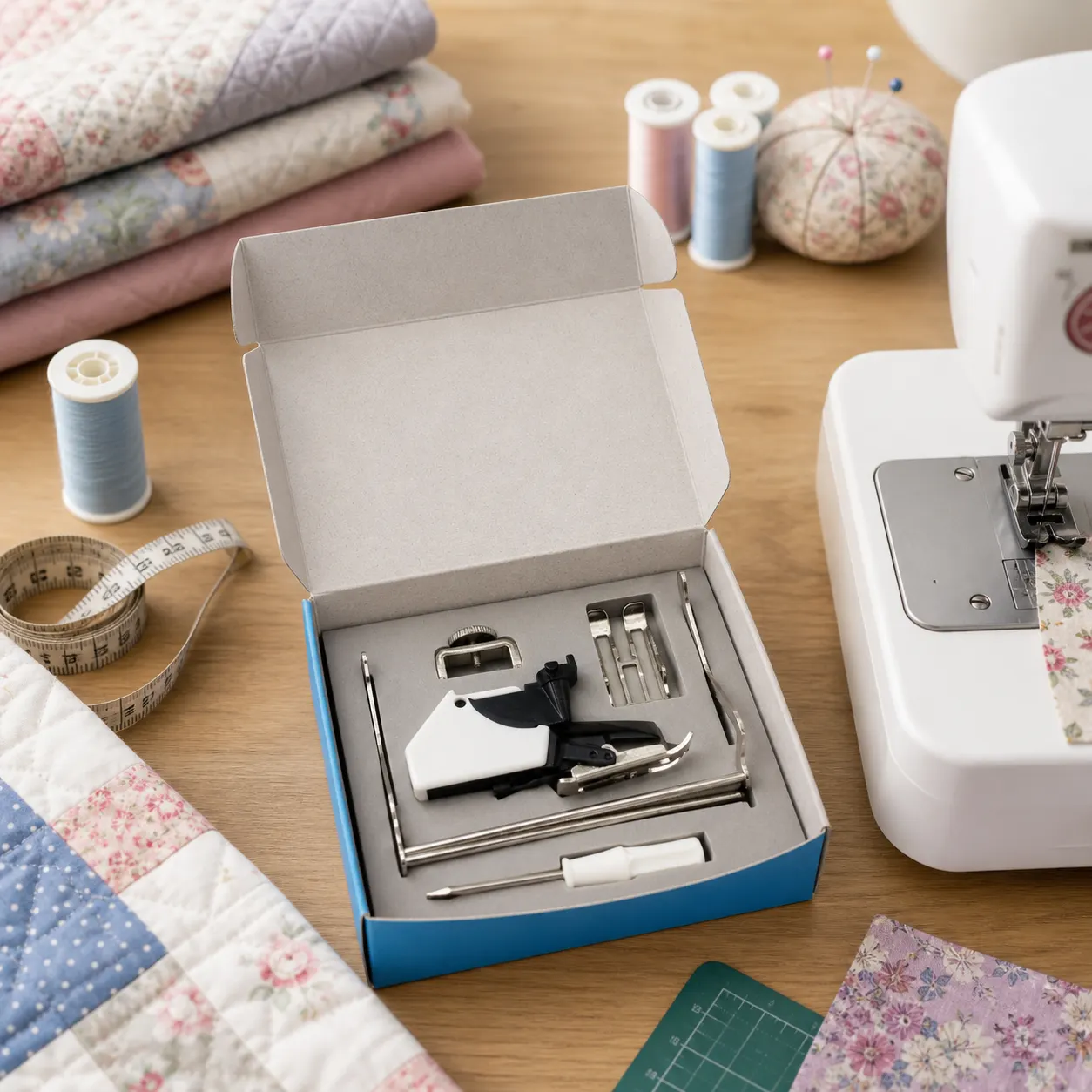
For a UK home quilter working at a dining table, box-room sewing desk or shared craft-class bench, the decision is usually about risk. If the quilt top took weeks to piece, the accessory cost may feel small beside the worry of dragging, stretching or wrinkling the back. The P60445 saved offer is documented as a synchronous-feed presser-foot accessory set for household sewing machines, so the key question is not whether walking feet can be useful in quilting. It is whether this kind of presser-foot accessory matches your machine and the quilting job in front of you.

The UK home quilting job that makes the decision urgent

Picture a baby quilt laid out on a kitchen table in Leeds, spray-basted or pinned, with the backing already trimmed close enough that you do not want to unpick a row of stitching. The first quilting lines are often where doubts start. A regular presser foot presses down from above while the machine feeds from below, and that can be enough on simple fabric. With a quilt sandwich, the top layer may creep, the backing may form soft ridges, and the bulk of the quilt may pull against your hands.

That is why many buyers search before starting, not after the quilt is finished badly. The job is controlled feeding through layers, especially for straight-line quilting, simple channel quilting and attaching binding. A walking foot is not mainly about making the machine stronger. It is about helping the fabric layers move more predictably while you guide the work. If your planned quilting is dense free-motion work, decorative curves or a technique that needs the fabric moved freely by hand, the decision changes because a walking foot is not the same as a free-motion foot.

The documented facts to check against your machine

The frozen product facts here are deliberately limited. The item is described as the P60445 synchronous-feed presser-foot accessory set from an archived offer. Its listed attribute names it as a presser foot, and its application is stated as household sewing machines. It is also recorded as a new sewing-equipment accessory. Those facts are useful, but they do not prove universal fit, brand compatibility, stitch-width clearance or whether an adapter is needed for your exact machine.

Before you treat any walking foot as the answer, check your sewing-machine manual, the presser-foot attachment area and the seller’s visible product photos if available. You are looking for plain evidence that it is a presser-foot accessory for your type of domestic machine, not an industrial walking-foot machine part and not a foot pedal. If your machine uses unusual fittings, a high-shank arrangement, a brand-specific adapter or an older attachment style, the words “household sewing machines” should be treated as a starting point rather than a final compatibility promise.

When a walking foot is worth considering for quilt layers

A walking foot is worth considering when the project is layered and the stitch path is controlled: a patchwork throw, a cot quilt, a lap quilt, quilted placemats or binding on a finished edge. The buyer who benefits most is usually not chasing a professional studio setup. They are trying to finish an existing project on a domestic machine without turning the back into wrinkles or pushing the top out of square. That is a practical, modest job, and it fits the reason people look for a synchronous-feed presser-foot accessory.

It may also make sense if quilting is not your only layered sewing task. Some household sewing users reach the same problem with long seams, flannel layers, bag panels or binding, where one layer creeps ahead of another. That does not mean every thick material becomes easy, or that the accessory turns a small domestic machine into a heavy-duty machine. It means the purchase can be reasonable when your main frustration is feeding and alignment, not a lack of motor power, needle suitability or space to physically handle the fabric.

Mismatches that should make you pause before buying

Do not buy a walking foot only because the quilt feels difficult. If the machine is already struggling to pierce the layers, if the needle is bending, if the quilt cannot fit comfortably through the throat space, or if the project needs free-motion quilting, the accessory may not solve the real problem. A walking foot also will not correct poor basting. If the backing is loose or the wadding is uneven before sewing starts, more controlled feeding may still leave you with distortion.

The biggest purchase risk is fit. Generic-looking presser feet can appear similar online but still fail at the attachment point, needle clearance or movement mechanism. The supplied facts for this item do not state low shank, high shank, brand names, included soles, a stitch guide or a universal-fit claim. That absence matters. A compatibility-conscious buyer should pause if they cannot confirm how their machine accepts presser feet, or if they need an adapter and cannot verify that the adapter, foot and needle position will work together.

A bench checklist before the first quilting line

Use this as a working checklist at the sewing bench before you commit the real quilt: confirm your project is a layered quilt sandwich suited to straight or gently guided stitching; confirm the accessory you are considering is a presser foot, not a pedal or industrial part; confirm the documented application says household sewing machines; check your machine manual for the presser-foot fitting; inspect the attachment point and needle area; practise on a sample made from the same top fabric, wadding and backing; support the quilt weight on the table so it does not drag.

Then check the result like a buyer, not like someone trying to justify a purchase. Look at whether the top layer still creeps, whether the back forms ridges, whether the stitches look consistent enough for the job, and whether the foot feels secure while sewing. If the sample improves but still puckers, adjust the preparation before blaming the accessory: rebaste, reduce drag, smooth the layers and slow down. If the sample cannot be sewn safely or the foot does not attach cleanly, stop before using it on the quilt you care about.

Walking foot, regular foot or another quilting foot

For a simple comparison, start with the job rather than the accessory name. A regular presser foot may be enough for piecing quilt blocks, sewing a single seam or stitching light fabric where the layers do not creep. A walking foot is the better candidate when you need more controlled feeding through a quilt sandwich, especially for straight-line quilting or binding. A free-motion foot belongs to a different style of quilting where the fabric is moved by hand in many directions, so it answers a different question.

A stitch-in-the-ditch foot is also not the same decision. It can help guide stitching along seam lines, but the issue here is whether the layers feed evenly while the quilt moves through the machine. Some quilters may use different feet for different stages: one for piecing, one for quilting lines, another for specialised guidance. The P60445 facts identify a synchronous-feed presser-foot accessory set for household sewing machines, so evaluate it against the feeding problem first, then decide whether your intended quilting style needs something else.

A grounded next step for a UK buyer

If your project is a quilt sandwich on a household machine and your plan is straight-line quilting or binding, the next step is a fit check, not a rushed purchase. Compare your machine’s presser-foot fitting with the documented product language and any visible attachment details. The saved commercial information lists the price as £24.49 with VAT included, free UK delivery, processing in 1–3 business days, delivery 2–4 business days after dispatch, and a 30-day return window, but those terms should sit behind the compatibility decision, not replace it.

If the fit evidence is clear, practise first on a small layered sample and keep the real quilt supported on a table or extension surface. If the fit evidence is unclear, ask for confirmation before ordering or choose a brand-specific option with clearer machine guidance. The sensible answer to “do I need a walking foot for quilting” is not always yes. It is yes when the job is layered feeding, the machine compatibility is credible, and you are prepared to test on scraps before sewing into the quilt you have already invested time in.