The immediate answer before sewing the quilt sandwich

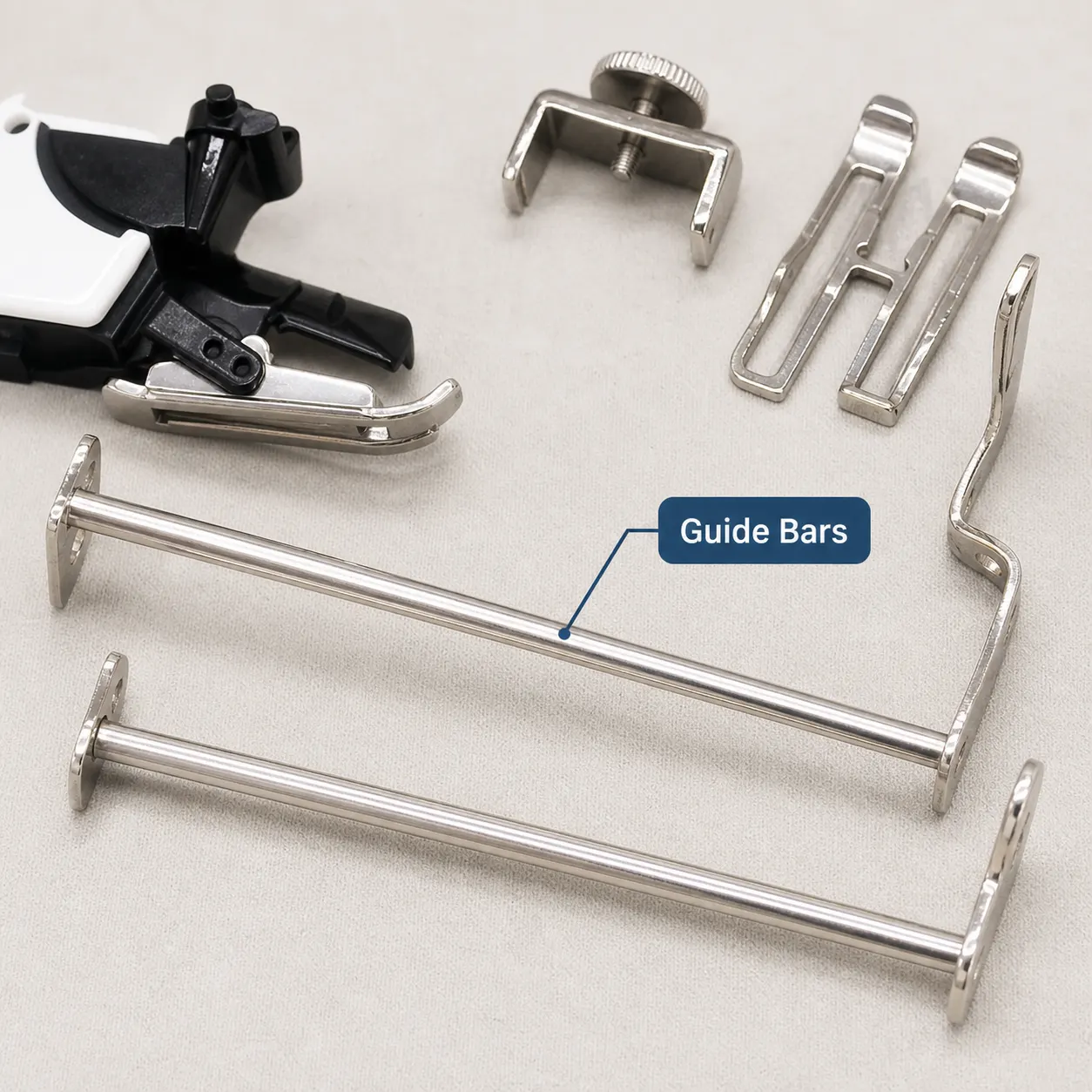
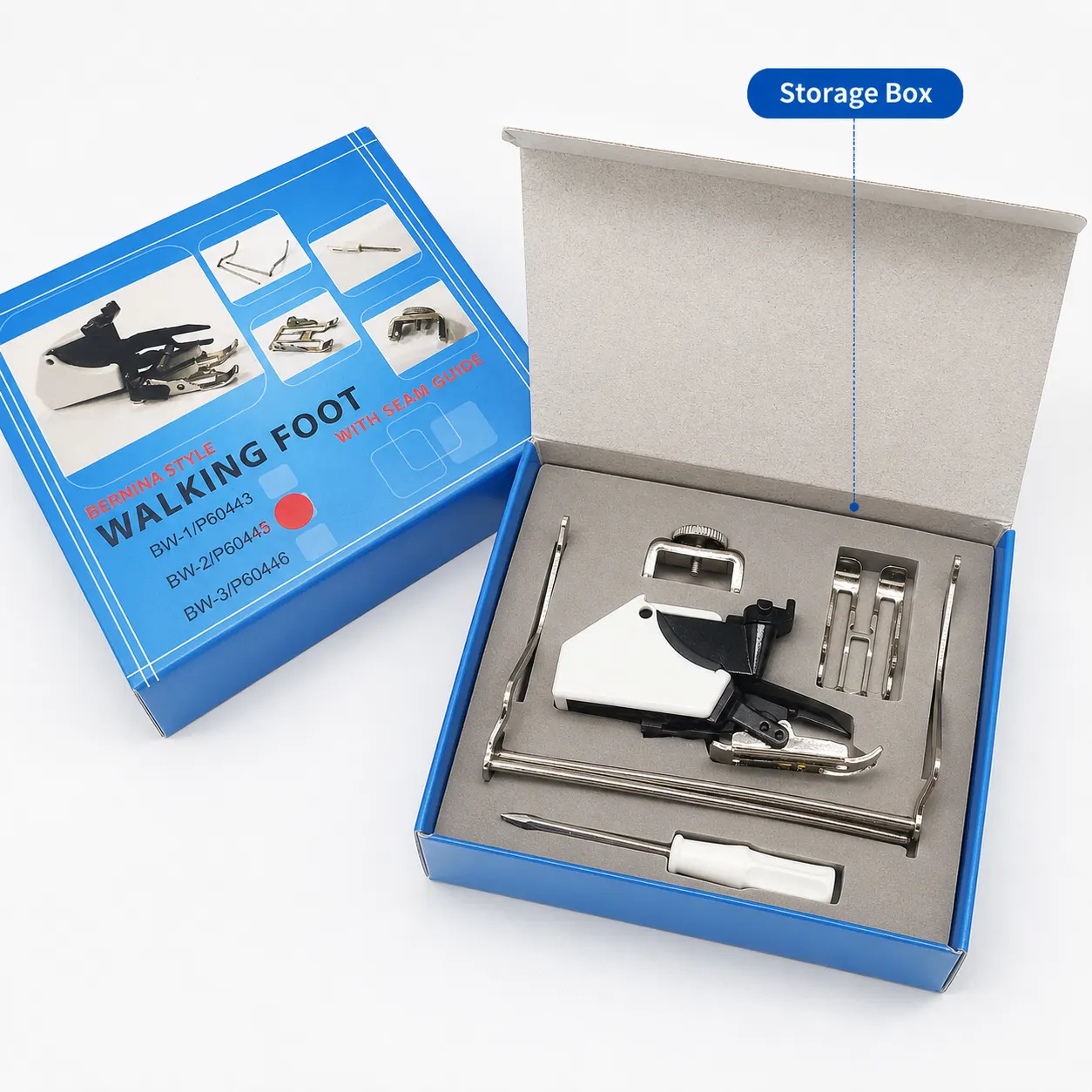
An even feed foot for quilt layers is worth considering when your main problem is fabric layers moving at different speeds under a domestic sewing machine. It is a presser-foot accessory, not a new machine and not a foot pedal. The documented product here is a P60445 synchronous-feed presser-foot accessory set for household sewing machines, so the sensible first decision is simple: if your job is straight, controlled sewing through layered fabric on a household machine, it may belong on your shortlist; if your machine fit is uncertain, check that before you sew the real quilt.
For the Bristol kitchen-table quilter, the job is not to buy a clever gadget for its own sake. The job is to protect work already invested in piecing, pressing, backing and basting. A regular presser foot can press down from above while the machine feed dogs move fabric from below, and that mismatch is where many people start worrying about shifting layers. The article cannot promise a perfect result, because the saved product facts do not document fabric tests, stitch widths, brands, sole types or quilt sizes. It can, however, help you make a cleaner decision before you risk puckers on the back of a baby quilt, patchwork throw or first larger quilt.
The UK home-sewing setting this accessory is really being judged against
Picture a household sewing machine set up on a kitchen table in Bristol, with the quilt weight partly supported by the table and partly by the sewer’s hands. That is a different setting from an industrial workshop, a long-arm quilting frame or a dedicated upholstery machine. The saved offer describes a synchronous-feed presser-foot accessory set for household sewing machines, so the most relevant buyer is the person trying to finish straight-line quilting, edge stitching or binding at home without changing machine category.
That distinction matters because many searches around walking feet become muddled. Some people mean a walking-foot industrial sewing machine. Others mean a foot pedal. In this case, the documented accessory name is a presser foot, and the listed application is household sewing-machine use. That makes it most relevant to a domestic-machine user who wants better fabric control on layered work, not someone expecting a heavy-duty machine upgrade. If your actual problem is that your machine lacks power, clearance or needle suitability for the material stack, a presser-foot accessory alone should not be treated as a cure.
The documented facts to check before trusting it with quilt layers
The public product facts are deliberately narrow: the item is recorded as a P60445 synchronous-feed presser-foot accessory set, the listed accessory name is presser foot, the stated application is household sewing machine, and it is recorded as a new sewing-equipment accessory in the saved offer. Those facts are useful because they place the item in the right broad category for a home sewer comparing presser-foot options. They do not, by themselves, prove fit for every machine or every quilting method.
Before buying for quilt layers, compare those documented facts with your own machine manual and project plan. You need to know whether your machine accepts this style of presser-foot accessory, whether the attachment point matches, and whether the foot can move without fouling the needle assembly or screw area. The frozen facts do not name Brother, Janome, Singer, Bernina, Pfaff or any other brand, so do not infer brand compatibility from the phrase household sewing machine. Treat that phrase as a starting point for fit checking, not a universal-fit promise.
Where an even-feed foot fits quilting work and where it does not
For many home quilters, the appeal of an even-feed style foot is most obvious on long, straight or gently guided seams where the top, batting and backing need to travel together. That could include simple straight-line quilting across a baby quilt, sewing binding around the edge, or keeping a patchwork throw more settled as it passes under the needle. The key idea is fabric control through layers, rather than decorative free-motion movement.
It is not the right answer for every quilting task. If you want free-motion quilting, you are usually thinking about a different sewing approach and a different kind of foot. If your plan depends on a specialist stitch-in-the-ditch guide, the saved facts here do not document one. If your quilt is too bulky for the throat space of your machine, the accessory cannot create more room. If the machine is poorly set up, the needle is wrong for the project, or the quilt is not basted properly, a presser foot will not remove the need for basic preparation.
The mismatch checks that can save a wasted order
The biggest risk is not that the phrase even feed sounds wrong; it is that a presser foot can look plausible online and still not physically suit the machine in front of you. Compatibility-conscious buyers should check the machine model, shank style, screw position and needle movement before purchase. The saved product copy does not provide shank type, adapter details, stitch-width limits, changeable soles or brand-specific guidance, so those points remain open checks rather than answered claims.
There is also a language mismatch to avoid. This is a presser-foot accessory set for household sewing machines, not a replacement sewing machine, not an industrial walking-foot machine and not a pedal under the table. Buyers making curtains, garments, bags or flannel projects may still find the category relevant when fabric layers creep, but the article cannot claim suitability for those materials from the saved facts alone. If your project involves unusually thick seams, coated fabrics or dense bag construction, the more honest next step is to check the machine’s own limits first.
A Bristol kitchen-table fit checklist before the real quilt goes under the needle
Use this checklist as a working pause before sewing the quilt itself. First, confirm the accessory category: the documented item is a P60445 synchronous-feed presser-foot accessory set, with the accessory name listed as presser foot. Second, confirm the machine setting: the saved offer states household sewing-machine application, so compare that with your actual domestic machine rather than assuming industrial compatibility. Third, check the attachment area on your machine against the product photos or listing details available at purchase, because the frozen facts do not state shank type or brand fit.
Next, check the task rather than just the product name. For quilt layers, decide whether you are doing straight-line quilting, edge stitching or binding, because those jobs are closer to the reason people look for even feeding. Then check the environment: support the quilt weight on the Bristol kitchen table so the fabric is not dragging away from the needle. Finally, check aftercare expectations: the commerce facts state VAT included, Free UK Delivery, 1-3 business days processing, 2-4 business days after dispatch and a 30-day return window, but return eligibility and instructions are confirmed at the point of purchase, so keep the fit question settled before relying on the order.
How to compare it with carrying on using a regular presser foot
A regular presser foot may be enough when the fabric is light, the seam is short, the layers are not creeping, and the finished line does not need to cross a large quilt sandwich. If you can test on layered scraps and the top and backing stay aligned, you may not need another accessory for that specific job. This is the plainest buying filter: do not add a tool unless it solves the problem you are actually seeing on your machine.
The even-feed option becomes more relevant when the problem repeats across longer seams or when the top layer appears to move differently from the lower layers. The documented product is at least in the right broad family because it is a synchronous-feed presser-foot accessory for household sewing machines. Still, the comparison should remain grounded. You are not choosing between guaranteed success and guaranteed failure; you are choosing whether a presser-foot accessory is a reasonable next control measure before quilting or binding work you would be frustrated to unpick.
A grounded next step before buying or sewing
The practical next step is to make the decision in two passes. First, decide whether your problem is genuinely layer control on a household machine. If yes, an even-feed presser-foot accessory belongs in the conversation. Second, decide whether this specific P60445 set can be verified against your machine before you order. Because the saved facts do not document brand fit, shank type or included guides, the compatibility check should happen before price or delivery convenience becomes the deciding factor.
If the fit checks line up, the product information gives you the commercial basics: the listed price is £24.49, VAT is included, Free UK Delivery is stated for eligible United Kingdom orders, processing is listed as 1-3 business days, and delivery is listed as 2-4 business days after dispatch. If the fit checks do not line up, pause rather than hoping the accessory will adapt itself to your machine. For a quilter at a Bristol kitchen table, the best purchase is the one that helps finish the quilt with fewer surprises, not the one that merely uses the right search phrase.